A window can be generous with daylight and stingy with information. That is the whole promise of privacy glazing: you keep the light, and the street keeps its distance. But frosted, textured and tinted glass are not interchangeable, and the difference tends to show up at the worst possible moment — after dark, when your kitchen lights are on and the pavement outside is not. What follows is how each family of glass behaves, how much it actually hides, how much light it gives back, and where it earns its place.
Privacy Is Not a Single Number
Glazing is usually described with one figure: visible light transmission, a percentage telling you how much daylight gets through. Useful, but it says nothing about obscurity. Two panes can admit the same amount of light while one leaves a neat outline of your shoulders and the other dissolves the room into a pale wash.
Two rules matter more than any spec sheet. First, distance: a face pressed close to the glass is far more legible than a figure two metres back, which is why a small bathroom window protects you better than a full-height one in a hallway. Second, the night reversal. Most privacy glass works by scattering light, and scattering only hides detail as long as the bright side stays outside. Switch the lights on indoors and the effect flips.
Before choosing, answer these for each window:
- What exactly do I need to hide — shapes, faces, or just the fact that someone is home?
- How close can a passer-by or neighbour get to the glass?
- Is the room lit in the evening, and is it in use then?
- Can I afford to lose daylight, or is this the darkest room in the house?
- Do I want the glass to be a feature, or to disappear into the background?
Frosted Glass: The Dependable Default
Acid-etched or sandblasted glass — satin, full frost, or one of the softer half-tones — hides detail more reliably than anything else at a similar price. A good full frost turns a person into a moving patch of colour; at a metre's distance you will not read a face or a gesture. Lighter satin finishes are gentler and reveal more, which suits a dining room better than a bathroom.
It also keeps most of the daylight and spreads it evenly, so small rooms feel brighter rather than merely lighter. That combination makes frost the natural choice for bathroom and shower windows, side panels beside a front door, glazed internal doors, and partitions where you want the hallway lit without seeing the coats.
Two caveats. Frost can look flat across a large opening; a band of clear glass at the top, or a gradient etch, gives the eye somewhere to rest. And if the glass is etched on one face only, ask for that face to be fitted away from the side you clean — a smooth surface is much easier to keep streak-free.
Textured Glass: Character That Depends on Direction
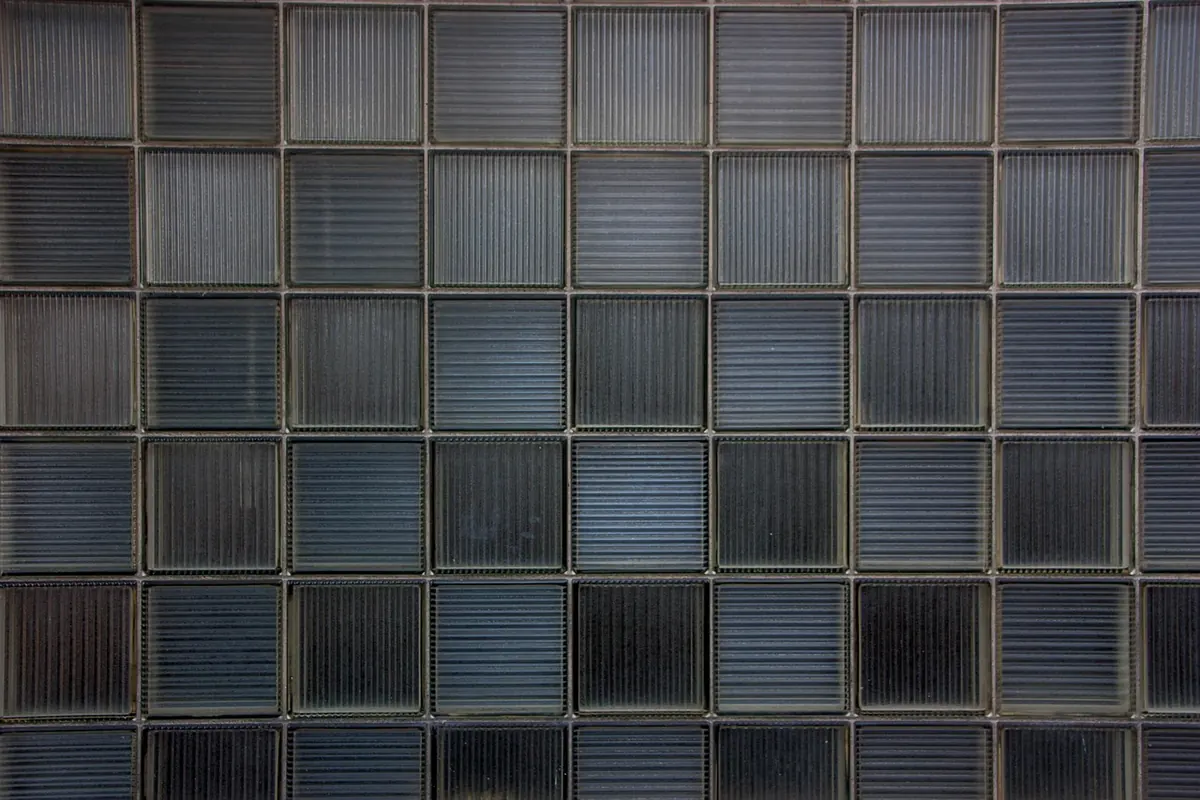
Reeded, ribbed, hammered, pebble, cathedral: these patterns work by bending light at their ridges and dimples. Fine, dense patterns scatter almost as thoroughly as frost. Broad reeds distort rather than dissolve — you lose faces and detail, but you can still see a shape move and tell whether a lamp is on.
Direction is the part people forget. Vertical reeds slice a horizontal sightline, which is why a fluted screen in a hallway hides someone walking past but reads differently to a person sitting directly opposite. Horizontal reeds do the reverse. Neither does much at close range through a wide pattern, so a textured pane guarding a street-facing window usually wants a fine pattern or a tinted backing.
Where texture earns its keep is where the glass is on show: period front doors and their sidelights, pantry and larder doors, kitchen partitions, stairwell screens, shower panels with a bit of sparkle. Specify the orientation when you order, and ask for a sample to hold up at the real viewing distance. For doors and sidelights, choose a laminated build rather than a single pane — it is safer, and the interlayer adds a little obscurity of its own.
Tinted Glass Does a Different Job
Bronze, grey, green and blue tints cut glare and solar heat, and they calm a very bright room beautifully. What they do not do is hide anything. During the day, when the outdoors is brighter than the room, a tint reduces how much of the interior reads from outside — a genuine effect, but a conditional one. At night it behaves like clear glass with the lights on.
So treat tint as a comfort choice first. It suits west- and south-facing rooms where screens wash out, contemporary facades that want a darker envelope, and any window where you plan to add frost, texture or a blind for actual privacy. Ask your glazier to confirm the glass is heat-treated for the frame and orientation: heat-absorbing tints run hotter, and that has to be designed for, not guessed at.
Hybrids Worth Knowing
- Laminated privacy glass with a patterned or opaque interlayer: the obscurity sits inside the pane, so it cannot peel and it survives a knock. Good for doors and low-level glazing.
- Applied film on existing glass: the cheapest retrofit, ideal for a rental or a single overlooked window. Leave a small margin at the edges, and check with the window supplier about warranties before you stick anything on.
- Switchable glass: clear or opaque at the flick of a switch, wired in. It blocks the view but not the light, and it still shows glow and movement. Best where a room occasionally needs to be open — a study that becomes a guest room, a meeting space off a corridor.
Matching the Glass to the Room
Bathrooms and bedrooms
Full frost or a fine texture, fitted low enough to cover the parts of the room that matter, with an opening section for ventilation if the window is the only source. If you would rather have a view, use clear glass with a sheer blind or a higher sill instead of a half-hearted etch that hides nothing.
Front doors and hallways
Reeded or fluted glass in a laminated build, with the pattern running vertically to read as part of the door's architecture. A narrow sidelight needs a denser pattern than a wide one — there is simply less glass to break up the view.
Home offices and street-facing rooms
This is where a combined approach pays: a textured or frosted lower band at seated height, clear glass above for daylight, and a tint if the screen glares. You keep the view standing up and lose it where you actually sit.
Internal glazing
Frost for corridors and utility rooms, texture for anything you want to look at for years. In kitchens, keep the textured face away from the hob and sink; the dimples trap grease and are tedious to clean.
Getting It Right Before You Order
Ask for a physical sample, not a photograph, and look through it at the wrong end of the day — a grey winter evening with the room lights on tells you more than a bright morning in a showroom. Stand at the distance a neighbour would. Check which face is smooth, confirm the pattern direction in writing, and decide now whether a curtain or blind will be the second layer, because most privacy glass is a filter rather than a wall.
If the window overlooks a neighbour or sits in a bathroom, local rules on obscure glazing may apply, and planning conditions sometimes name the glass. Worth a quick check with your designer or glazier before the order goes in; it is far cheaper than re-glazing.
Photo: huntlh / Pixabay